The short answer
Yes, anxiety can run in families, and it travels along two paths: the genes we inherit and the home we grew up in. Research on family and twin studies estimates that genes account for about a third of the risk for generalized anxiety. Life experience, including what we absorbed at home about worry, safety and feelings, shapes the rest. That is encouraging news, because patterns learned at home can be unlearned with the right support.
Anxiety is one of the most common mental health challenges in the US, and many people notice that it seems to follow their family. If you, your siblings or your parents tend to feel anxious about the same things, you may be looking at a family pattern. This blog post explains what runs in families, four signs to notice, what sets anxiety off, and what helps you feel calmer, on your own and with your partner.
Anxiety is common, and it is well understood. According to the National Institute of Mental Health, about 19 percent of US adults have an anxiety disorder in a given year and about 31 percent over a lifetime. The Anxiety and Depression Association of America (ADAA) shares figures for each type, including about 6.8 million adults with generalized anxiety and about 15 million with social anxiety. You are in good company, and effective support is available.
What Runs in Families
Genes can pass along a nervous system that notices change quickly and takes longer to settle. Home life adds the lessons: how worry was handled, how safe it felt to share feelings, and how stress was soothed. Together they shape the way you meet the world today.
Both are influences, and both can change. A nervous system learns calm through new experiences, and that is where support makes its difference.
What the research says
Anxiety runs in families through genes and through home
Genes play a part. A review of family and twin studies of generalized anxiety estimated a genetic contribution of about 32 percent, and found that the rest comes mostly from each person’s own life experience.
Home life plays a part. In a genetically informed study of mothers, fathers and children, anxiety passed between parents and children through the home environment, and a child’s anxiety also shaped how caregivers felt.
Many small influences. A 2026 genome-wide study of 122,341 people with major anxiety disorders found 58 genetic variants that each add a small amount of risk, with strong overlap with depression and neuroticism. Many small influences work together, so genes shape risk while experience and support keep shaping the road.
Closer relatives, higher likelihood. In a meta-analysis of family and twin studies, relatives of people with an anxiety disorder had odds about four to six times higher of having one, and each person’s own life experience also played a significant role.
Sources: Gottschalk and Domschke (2017), Genetics of generalized anxiety disorder and related traits, Dialogues in Clinical Neuroscience and Ahmadzadeh et al. (2019), Anxiety in the family, Journal of Child Psychology and Psychiatry; Strom et al. (2026), Nature Genetics; and Hettema et al. (2001), American Journal of Psychiatry. Each source links to the published paper.
Understanding where your anxiety comes from is often the first step toward feeling calmer.
Genes set a starting point, and home life, relationships and support keep shaping the road.
4 Signs Your Anxiety May Stem From Your Family History
If you recognize yourself in the signs below, your anxiety may carry a family thread. Each one points to something that can be understood and changed.
Overly Stressed
If you have seen your parents or even grandparents always stressed out, they may have had an anxiety disorder, and you might have inherited their genetic traits, including their anxiety. Maybe your dad was always stressed about his job because he was under pressure, or your mom was always stressing about school. This can affect how you handled anxiety and stress growing up.
Cold or Unattached
Cold, unattached and distant parents can raise anxious children. Even without an anxiety disorder in the family, a lack of physical affection, safe space, words of affection and the warmth a child needs can show up in the child as anxiety. A warm and welcoming home with loving parents raises children to be secure in all areas of life, as they feel loved and understood.
Unable to Handle Stress Well
Did your parents have big reactions to every little thing, or take their anger out on you or your siblings? This could be because of their difficulty handling stress or processing anger, and it can rub off easily. Grown adults can also find it hard to handle traumatic moments like the death of a parent, which can leave the children around them unable to handle stress well as adults.
Unhealthy Coping Mechanisms
Dealing with anxiety and stress is a battle in itself. If your parents coped with their anxiety in unhealthy ways, it can lead to more negative feelings and worsened anxiety. If you grew up in a house where your parents reached for alcohol or cigarettes to deal with their problems, you may not have found healthy coping mechanisms either.
What Can Set Anxiety Off
Anxiety can rise at unexpected moments, and a few common triggers are worth knowing.
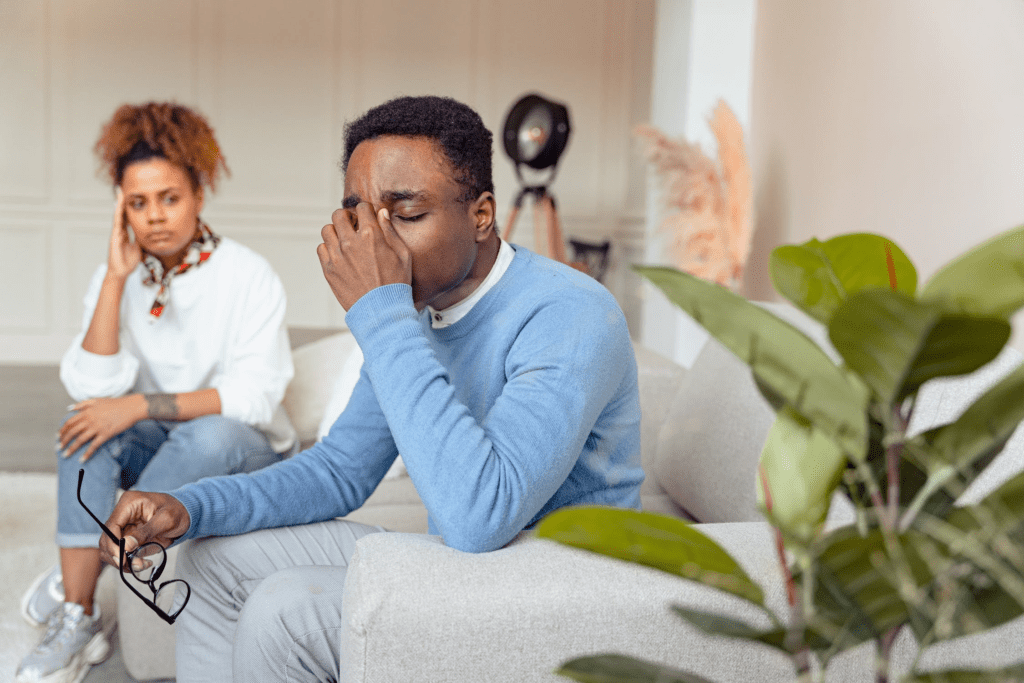
- Serious Health Complications. Serious health complications can make most people anxious, even without a diagnosed disorder. Connecting with a medical professional and being proactive about treatment may help.
- Medication. Different medications can affect your body and your psychological wellbeing. If your increased anxiety coincides with starting a new medication, a conversation with your doctor helps.
- Over Thinking. Dwelling on things that cause you stress can trigger anxiety. The mind is powerful, and if you notice yourself stewing, pull away and give yourself a break.
- Stress. Stress about money, family and relationships can sometimes cause anxiety. There are things we need to let go of, things we cannot control, and that is okay. If stress is hard to manage, therapy or counseling can help you navigate it.
- Social Settings. Time with familiar, comfortable people feels best, and settings where you must make an effort against what comes naturally can raise anxiety. Notice how you feel with people, and choose settings that do not exhaust you.
Personal Triggers matter too, such as heavy traffic, loud noise, cluttered spaces or particular animals. Working through them with a therapist helps them lose their pull. Learn more about anxiety treatment in Silicon Valley.
When Family Moments Trigger You
Time with family can bring old patterns to the surface. Four steps help you meet those moments with more calm.
- 1Recognize and Acknowledge How You FeelIdentifying emotional reactions is crucial to progress. Start with your immediate reaction, in its most bodily sense. Where do you feel it set in: your stomach, your jaw, your fists? Are your shoulders tensing up, or is your breath speeding up? Practice mindfulness and take a moment to pause your emotional response.
- 2Identify Your TriggersWhen you reflect instead of reacting, you can identify your triggers better. Do you feel this way when you are asked to do something you do not want to do? Do you feel threatened by someone’s presence or demands? Are you running on their schedule? Is a lack of privacy affecting your emotional state?
- 3Point Out External and Internal CausesSometimes situations outside your control become triggering, and other times it is your own thoughts and emotions. Differentiating between what is internal and what is external can help you decide your next step. Can you remove yourself from the situation, or recognize that the trigger is not protecting you at this moment?
- 4Work Through Your EmotionsTaking a breather to pause and reflect helps significantly, and it also takes introspection, self-honesty, openness and acceptance of your own role. Owning your responsibility, to yourself, lets you see yourself as an empowered individual responsible for your own well-being and progress.
What Helps
Anxiety is the body’s response to stress, so everything that lowers stress gradually lowers anxiety. These four steps are a gentle place to begin.
- 1Blog It OutSince anxiety is our body’s response to stress, all activities that reduce stress gradually lower anxiety. Art is a great aid to reduce stress, and being honest about your problem helps. Anxiety blogs and e-journals have helped millions find a cause.
- 2Eat a Healthy DietA diet rich in nutrients and minerals is best for an anxious mind. Good water intake regulates blood flow and has natural calming properties.
- 3Create a Daily Anchor That Tells Your Body You Are SafeWhen life is uncertain, your nervous system needs repetition. Choose one anchor you can keep even on hard days: a short walk outside before checking email, ten minutes of quiet breathing with a hand on your chest, a simple breakfast without screens, or a consistent bedtime routine.
- 4Talk to Someone Who Can Hold the Emotional Weight With YouAnxiety often softens when you stop carrying everything alone. Support can include a therapist who understands relationship dynamics, a trusted friend who can listen without escalating the story, or a support group.
If worry keeps growing, this blog post on signs worth noticing when anxiety grows can help, and low self-esteem and your relationship often travels with it.
If your anxiety rose after a health change or a new medication, a conversation with your doctor is a helpful first step.
What the research says
Support settles the brain’s alarm
A familiar partner calms the threat response. In a study of 110 adults facing the threat of a mild shock, holding the hand of a familiar partner lowered distress and quieted activity in brain networks linked to vigilance and self-control.
What I take from this. A nervous system learns calm through safe connection, which is why support from people you trust helps anxiety ease.
Source: Coan et al. (2017), Social Cognitive and Affective Neuroscience. Each source links to the published paper.
Anxiety and Your Relationship
Anxiety often travels into love. It can shape whether dating feels possible, and it shapes how partners feel with each other. This is a big topic, so it has a blog post of its own.
Go deeper
What relationship anxiety looks like, why it shows up, and what helps you and your partner feel secure.
These patterns often trace back to attachment, the way we learned to seek safety in close relationships. You can read more about attachment styles in relationships. Many people wait to seek support because anxiety makes the first step feel big, and a free 20-minute consultation is a gentle way to begin. You can read about couples counseling in Silicon Valley or anxiety treatment in Silicon Valley.
Anxiety During Big Life Changes, Including Divorce
In Silicon Valley and Palo Alto, life can look steady from the outside while the nervous system runs all day and all night. A divorce or another big change brings uncertainty, and anxiety rises when the mind lacks a clear picture of what comes next.
Separate What Is Urgent From What Is Scary
Write two lists: what needs action in the next 48 hours, and what feels frightening but can wait. This small practice eases the sense that you must solve your whole future today.
Grief can wear the mask of urgency. Give it space, and anxiety often eases.
Focus on What You Want to Protect, Not Only What You Fear Losing
Ask what you want to protect: your relationship with your children, your integrity, your sleep, your future capacity for love. It honors your grief and gives you a compass.
Limit divorce conversations to set times, use written messages when live conversations spiral, and pause before replying.
Marriage counseling can also help you reduce conflict and communicate clearly during a separation. If anxiety around a big change is taking over, support is available. Learn more about anxiety treatment in Silicon Valley.
How I Work With Anxiety
Transforming relationships through the science of connection: integrating the brain, nervous system and biology of love to create lasting emotional security and intimacy.
As a PACT-trained therapist, I integrate the Psychobiological Approach to Couples Therapy (PACT) with a multimodal, integrative approach that draws from the Gottman Method, Emotionally Focused Therapy (EFT), attachment theory, and trauma-informed care. Grounded in what we know about the brain, nervous system, and biology of human connection, our work goes beyond simply talking about problems. We explore how attachment patterns, early experiences, and past relational wounds shape the way you connect, communicate, and respond to one another. Through moment-to-moment awareness of your emotional, physiological, and nonverbal interactions, we work toward greater emotional safety, deeper understanding, and a more secure and fulfilling relationship.
Anxiety lives in the body as well as the mind, so our work includes both. I also have four additional years of advanced training in Integrative Body Psychotherapy (IBP), an experiential approach. A free 20-minute consultation is an easy way to see how this feels for you.
Take the First Step
You can begin with curiosity. A free 20-minute consultation is an easy first step, and you can come together or on your own. You can ask your questions, share what is happening, and see whether it feels right.
I see clients at my Menlo Park office and online across California, including Palo Alto. You can explore the full Silicon Valley practice, my couples counseling and my Palo Alto practice, or learn more about Azizeh Rezaiyan. Couples also come from Mountain View, Redwood City, Los Altos and Cupertino.
To begin, book a free 20-minute consultation or call (650) 206-9973. The consultation is private, and you can simply bring yourselves. If you are in crisis, call or text 988 right away.
Related reading
Attachment patterns often sit beneath anxiety in relationships, and these blog posts can help.
Keep exploring: blog posts, services and locations
- Signs Worth Noticing When Anxiety Grows
- Low Self-Esteem and Your Relationship
- Toxic Families and the Development of Depression
- Career and Relationships: Finding a Healthy Balance
- Anxiety Counseling in Silicon Valley
- Couples Counseling in Silicon Valley
- Marriage Counseling in the Bay Area
- Marriage Counseling Near Palo Alto
- Menlo Park Office
- Couples Counseling in Mountain View
- Couples Counseling in Redwood City
- About Azizeh Rezaiyan
FAQ
Common Questions
Is anxiety hereditary?
Anxiety can run in families. A review of family and twin studies estimated a genetic contribution of about 32 percent for generalized anxiety, and life experience shapes the rest. Anxiety reflects many small genetic influences working together rather than a single gene; a 2026 genome-wide study found 58 variants that each add a small amount of risk. Both parts can change with support. You can read about anxiety treatment in Silicon Valley.
If my parent has anxiety, will I have it too?
Family history raises the likelihood, and it remains a likelihood, because life experience shapes the outcome. A meta-analysis of family and twin studies found that relatives of people with an anxiety disorder had odds about four to six times higher of having one. Calming skills, safe relationships and support keep shaping the outcome. You can schedule a free 20-minute consultation.
Can I have anxiety if no one in my family does?
Yes. The same meta-analysis found that each person’s own life experience plays a significant role, so anxiety can appear without a family history. Stress, health changes and big life transitions can all raise it, and support helps whatever the source. You can read about couples counseling in Silicon Valley.
Can anxiety come from how I grew up?
Yes. Home life teaches us how to handle worry, how safe it feels to share feelings, and how to calm down. A study of mothers, fathers and children found that anxiety passed between parents and children through the home environment. Understanding this is a first step, and new experiences help the nervous system learn calm. You can read more about attachment styles in relationships.
What helps when anxiety flares up?
Start with one small stabilizer: slow breathing, a short walk, a steady meal or a few lines of writing. A daily anchor tells your body that it is safe, and talking with someone who listens eases the load. You can also schedule a free 20-minute consultation.
How does anxiety affect my relationship?
Anxiety can show up as insecurity, a wish for frequent reassurance, difficulty putting feelings into words, or a strong need for closeness. These patterns respond well to understanding and practice, and partners can work on them together. Read more in relationship anxiety: why it shows up in love and learn about couples counseling in Silicon Valley.
Is anxiety during a divorce normal?
Yes. A divorce shakes identity, routine and the future, and anxiety is a common nervous system response to that much uncertainty. Small daily anchors, written messages in tense moments and support from someone who understands relationships all help. Marriage counseling can also help reduce conflict and plan next steps with clarity.
Can counseling help with anxiety?
Yes. Counseling gives you a calm space to understand where your anxiety comes from and to practice new ways of responding. As a PACT-trained therapist, I draw on the brain, the nervous system and attachment, so the work reaches both mind and body. The free 20-minute consultation is private, and you can come together or on your own; you can schedule it here. Learn more about anxiety treatment in Silicon Valley.