

7 min read
The short answer
How big of an age gap is too big depends less on the number and more on whether both adults feel free to choose, feel equal and want the same things from life. A popular rule of thumb exists, and values, maturity and respect for each other matter far more. Honest conversation and steady habits help a relationship with a bigger gap thrive at any age.
Many couples wonder how big of an age gap is too big. This blog post looks at what really matters, what the numbers show about age gaps, and what helps couples with a bigger gap stay close. To explore why people are drawn across generations, read about the age gap relationship.
Written by Azizeh Rezaiyan, LMFT, with nearly thirty years of experience working with couples, including couples with a gap of two decades or more.
How Big of an Age Gap Is Too Big?
People ask about gaps of 5 or 8 years in their twenties and thirties, and about gaps of twenty years or more. There is a range of answers, and the number matters less than whether the two of you are in the same place on what counts: goals for children and work, where to live, how you handle money, and how each of you makes decisions. When both adults are free to choose and feel equal, a bigger number says little about how good the relationship can be. You may also come across a popular rule of thumb, half your age plus seven, which some people look to as a quick guide. It is one idea to look into, and values, maturity and respect for each other tell you far more than a formula.
What a healthy gap looks like
Both adults are free to choose, speak up and keep their own friends and goals.
When a closer look helps
A gap deserves a closer look when one partner holds most of the power, money or decisions, or when the bond rests on rescue or financial support more than on equal friendship. If that sounds familiar, please talk with someone you trust or a counselor.
What Is the Best Age Gap in a Relationship?
People search for the best age gap, and the numbers show that most couples are close in age. The best gap is the one where both of you feel respected and want the same things from life.
What the research says
Most couples are close in age, and big gaps are less common
Close in age is the pattern. A Pew Research Center analysis of Census Bureau data found that husbands and wives in the United States were on average 2.2 years apart in 2022. About 51 percent of opposite-sex marriages had spouses within two years of each other, 40 percent had a husband three or more years older, and 10 percent had a wife three or more years older.
A gap of twenty years is uncommon. The Census Bureau’s 2021 American Community Survey shows that about 1 percent of opposite-sex married couples had a gap of 20 years or more, compared with 5 percent of same-sex married couples. If you are in a relationship with a big gap, you are part of a small group, and the points below are written for you.
Sources: Pew Research Center (2024), Fry; U.S. Census Bureau (2023), Hemez and Mejia. Each source links to the published page.
What Is Worth Talking About Early
Many couples with a big gap say the age itself matters less than how they handle what comes with it. These are the places worth talking about early:
- Different life stages: children, retirement, energy and career plans
- Opinions from family and friends
- Balance of power, money and decision making
- Different pop culture, friend groups and ways of relaxing
- Thoughts about health, caring for each other and the years ahead
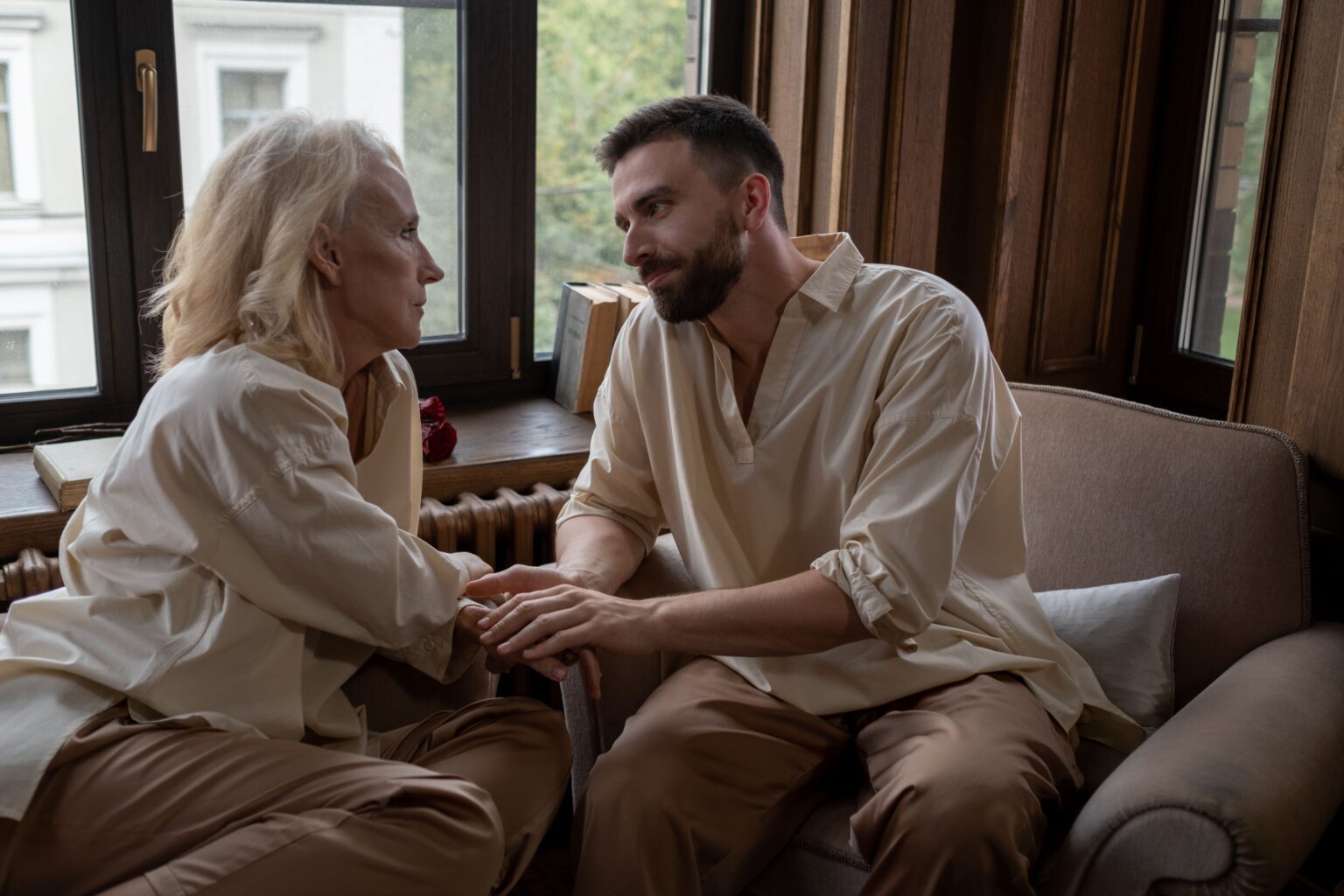
What the research says
Support from others helps couples stay committed
Disapproval has an effect. A 2006 study of socially disapproved relationships in Personality and Social Psychology Bulletin found that the more a couple felt that others disapproved, the lower their commitment tended to be. The study looked at relationships that others disapprove of, which includes many kinds of couples, so it is a pointer for age gap couples rather than a direct measure.
Partners found their own way to stay close. Partners in those relationships still reported high commitment overall. Warm, steady support from at least a few people makes a difference, and counseling gives both of you a place to build it.
Source: Lehmiller and Agnew (2006), Personality and Social Psychology Bulletin. The source links to the published paper.
Six Steps That Help It Thrive
- 1Name why you chose each otherEach of you shares what you love about the other, beyond age and beyond status. Appreciation that is specific builds trust.
- 2Talk about the future earlyChildren, work, retirement, where to live and how you would care for each other. Share hopes gently, and listen to the whole answer.
- 3Keep a balance of voicesMake decisions together, share money choices openly, and make sure each person’s goals have room. Check that your bond rests on equal friendship and emotional closeness, beyond rescue or financial support.
- 4Stay close to your own friendsFriends of your own age keep you grounded, and shared friends help your life together feel full.
- 5Meet the questions from others with calmYou can decide together how to answer relatives and friends, and choose a few people who cheer for you.
- 6Check in as the years go byNeeds change with time. A regular, kind check in keeps the two of you moving together.
Try this tonight.
Each of you finishes this sentence: one thing I love about our life together is… Share your answers, and add one hope for the next five years.
How I Work
Transforming relationships through the science of connection: integrating the brain, nervous system and biology of love to create lasting emotional security and intimacy.
As a PACT-trained therapist, I integrate the Psychobiological Approach to Couples Therapy (PACT) with a multimodal, integrative approach that draws from the Gottman Method, Emotionally Focused Therapy (EFT), attachment theory, and trauma-informed care. Grounded in what we know about the brain, nervous system, and biology of human connection, our work goes beyond simply talking about problems. We explore how attachment patterns, early experiences, and past relational wounds shape the way you connect, communicate, and respond to one another. Through moment-to-moment awareness of your emotional, physiological, and nonverbal interactions, we work toward greater emotional safety, deeper understanding, and a more secure and fulfilling relationship.
Before a big step such as moving in, marrying or having children, counseling gives both of you a calm place to hear each other and make agreements that feel good. I also have four additional years of advanced training in Integrative Body Psychotherapy (IBP), an experiential approach. A free 20-minute consultation is an easy way to see how this feels for you.
Take the First Step
You can begin with curiosity. A free 20-minute consultation is an easy first step, and you can come together or on your own. You can ask your questions, share what is happening, and see whether it feels right.
I see couples at my Menlo Park office and online across California, including Palo Alto. You can explore the full Silicon Valley practice, my couples counseling or learn more about Azizeh Rezaiyan.
To begin, book a free 20-minute consultation or call (650) 206-9973. The consultation is private, and you can simply bring yourselves. If you are in crisis, call or text 988 right away.
Related reading
Age, closeness and honest conversation connect, and these blog posts can help.
Keep exploring: related blog posts
FAQ
Common Questions
What is the half your age plus seven rule?
It is a popular rule of thumb that suggests the youngest partner that feels socially comfortable is half your age plus seven. It is one idea to look into and not the main rule, because values, maturity and respect for each other matter far more.
How big of an age gap is too big?
People draw the line in different places, and the number matters less than whether you are in the same place on goals, money, decisions and life stage. Both adults being free to choose and feeling equal is the best sign of a healthy gap. You can schedule a free 20-minute consultation to look at it together.
What is the best age gap in a relationship?
Most couples are close in age, with spouses in the United States about 2.2 years apart on average. The best gap is the one where both partners feel respected, share goals and keep growing together.
Is the half your age plus seven rule a good rule?
It is a handy starting point and a conversation starter, and many couples find it matches their sense of comfort. Because it is a guideline rather than research, values, maturity and respect for each other matter more. You can read more about the age gap relationship and couples counseling.
Does the age gap rule apply when the woman is older?
The same idea of equal footing applies to every pairing, including an older woman with a younger man and same sex couples. Couples with an older woman often talk more about social expectations and confidence, and the steps above suit every pairing.


