7 min read
The short answer
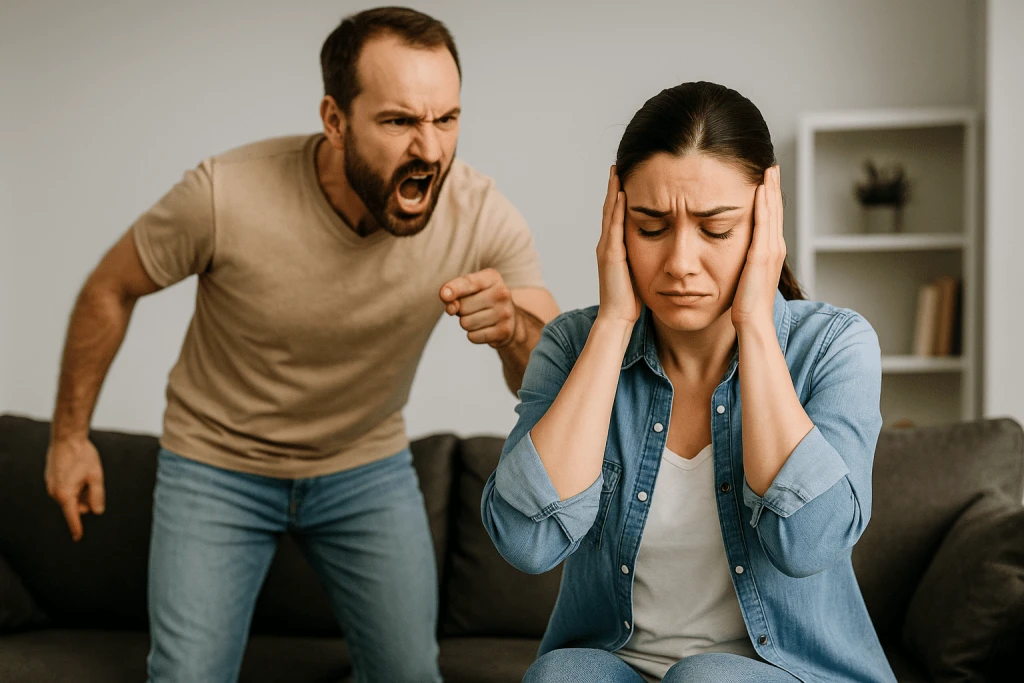
When your husband raises his voice, it usually means he feels overwhelmed, unheard or worried, and he is still learning a calmer way to say so. It often grows out of old patterns, as well as the moment. Understanding that gives you a place to start, and calm conversations become possible again.
When a voice gets raised at home, it can leave both of you feeling shaken. This blog post looks at why a husband may yell, what helps in the moment, how boundaries keep things safe and respectful, and how couples find calmer conversations again.
Written by Azizeh Rezaiyan, LMFT, with nearly thirty years of experience working with couples.
Why Does My Husband Yell at Me?
He wants to be heard
Many people raise their voice when they want the quieter version of the message to land. Clients often tell me, “my husband yells when he is stressed,” and underneath the stress there is usually a wish to be listened to and understood.
Stress and overload
Work pressure, money worries, tiredness and the load of family life all take energy. When a person is carrying a lot, small disagreements feel big, and his voice rises before he can find the words.
Feelings underneath the volume
In many men, anxiety or low mood shows up as irritability and anger, in place of sadness. If your husband seems short tempered or withdrawn, you can read about male depression support in Portland.
Patterns he learned growing up
Many people learned how to handle big feelings in the home they grew up in. When anger or raised voices were how problems got solved, those are the tools they know. As adults, old feelings can show up as a raised voice, irritability or stepping away.
The pattern between you
One partner pushes harder to be heard, the other steps back, and the pushing partner gets louder. Each reaction feeds the other. Seeing this pattern together is often the first step toward changing it.
When He Says You Only Listen When He Yells
Listening grows when both people feel safe.
This is something many wives hear. It can feel true to him: when he raised his voice, you finally stopped and responded. A response and listening are two different things, and what he is really asking for is to be heard.
When a person feels overwhelmed in a conversation, the body responds: the heart rate rises and taking in words gets harder. A calm start helps both of you stay present. When a conversation begins gently, it tends to continue gently, and people listen best when they feel safe.
You can be a good listener and ask to be spoken to with respect. Many couples find that naming what each person needs, in a calm voice, opens the way to being heard on both sides.
Passing Moment or Pattern?
Almost every couple raises their voices now and then. A heated moment after a stressful day, followed by an apology and a way back to each other, is part of being close. What matters is how often it happens, how it feels to you, and whether the two of you reconnect afterward.
A pattern is worth attention when:
- it happens most days, or most conversations rise to a high volume
- apologies and repair would help, and things stay the same
- you find yourself holding back what you want to say
- the children are in the room and feel the tension
- you would like more respect and kindness in how you talk to each other
If you notice several of these, support can help the two of you build a calmer way of talking.
What to Do When Your Husband Yells at You
The first few seconds shape a lot. You can help by keeping things steady.
- Breathe and soften your voice. A lower, slower voice invites the same in return.
- Say one calm sentence. “I want to hear you, and I can do that best when we both speak calmly.” Say it once.
- Take a break and name the time to return. “I need twenty minutes. Let’s talk at 8.” Many couples find that about twenty minutes helps the body settle. Returning is what makes it a break.
- Look after yourself. Step outside for fresh air, and call someone you trust if that helps.
When You Go Quiet Inside

Some women go quiet when voices rise. They feel far away, tired or deeply sad, as if they are in the room and a little apart from their own body.
If that is you, it is a protective response: when something feels big, the mind steps back to find calm. Taking in words is also harder when a person is overwhelmed, so quiet and listening can look different from the outside.
You can come back slowly. Feel your feet on the floor. Take one long breath out. Say, “I need a break to come back to myself.” If this has been your experience for a long time, support can help, and you can bring it to a consultation.
How to Talk About It Afterward
The best time is after the storm, when you are both calm. The way a conversation begins tends to set how it ends, so start gently: say how it affects you and what you need.
Setting Boundaries
A boundary is a promise to yourself about what you will do. It is about your own actions.
1. Decide
Choose what you welcome: calm voices, respectful words, privacy in front of the children and his family.
2. Say it once, calmly
“If our voices rise, I will step out, and we can continue when we are both calm.”
3. Do it
Step out, take a walk, or pause the call. Follow through every time.
4. Come back
Returning shows that you care.
Keep it steady and notice what changes. Many couples find that a consistent, kind boundary opens a new way of talking. If you would like support with this, a therapist can walk it through with you.
A Way Forward
Whatever is happening in your marriage, there is a way forward. For many couples it is finding their way back to each other. For some it is a peaceful, respectful decision to part. Both are real answers.
Finding your way back to each other
Many couples find that the yelling carries a wish for closeness and understanding. In couples therapy you understand the pattern between you, learn to speak so you are heard, and rebuild closeness.
A peaceful decision to part
When a couple chooses to separate, therapy helps them reach the decision with clarity, say what has been left unsaid, and close the chapter with more peace. It also supports the practical side, such as being kind and fair to each other and caring for the children.
Your safety comes first, and couples therapy fits best when both partners feel safe.
How My Work Helps
My approach is experiential. I am PACT Level 1 trained. PACT, the Psychobiological Approach to Couples Therapy, brings in what we know about the brain and the nervous system, so the work goes beyond talking about problems. It looks at attachment, at what your body and your early experiences bring into the relationship, and at how the two of you affect each other in the moment. I also have four additional years of advanced training in Integrative Body Psychotherapy (IBP).
For him
He notices where the strong feelings come from, builds emotional awareness, and learns to pause and name what he feels.
For both of you
You have a space to talk about what is happening, explore needs and learn respectful ways to handle conflict.
For you
You build confidence in setting boundaries, sort out your own feelings and decide what you need.
I see couples and individuals at my Beaverton office and online across Oregon. You can read more about couples counseling in Portland. I also see couples in Silicon Valley and online across California, and you can read more about couples counseling in Silicon Valley.
When two people love each other, they speak softly, because their hearts are close.
An old parable, author unknown
Calm and Closeness Are Possible
With support, self awareness and willingness from both partners, many couples move from raised voices toward respect, understanding and closeness. If you would like a calmer way of talking in your marriage, schedule a free 20-minute consultation or call (503) 852-2540. If you are in crisis, call or text 988 right away.
If you are a husband whose wife raises her voice, read Why Is My Wife Yelling at Me?
FAQ
Common Questions
Why is my husband yelling at me?
Common reasons are stress, wanting to feel heard, patterns learned growing up, strong feelings that carry anxiety or low mood, and a pattern where each of you reacts to the other. Understanding the reason gives you a place to start. If he seems short tempered or withdrawn, you can read more about male depression support.
What should I do when my husband yells at me?
Stay as calm as you can and soften your voice. Say one calm sentence, such as “I want to hear you, and I can do that best when we both speak calmly.” Then take a break of about twenty minutes and say when you will come back to the conversation.
Is it normal for a husband to yell at his wife?
Many couples raise their voices at times, especially during stressful periods. What matters is how often it happens and whether the two of you reconnect afterward. If you would like more calm in your conversations, therapy can help.
My husband says I only listen when he yells. What does that mean?
Often it means he wants to be heard. A response and listening are different, and people listen best when they feel safe. Many couples find it works well to name what each person needs in a calm voice and to take a break when either of you feels overwhelmed. You can be a good listener and ask to be spoken to with respect.
Can couples therapy help with yelling?
Yes. In couples therapy you understand the pattern between you, learn to be heard, and rebuild closeness. Many couples feel a shift within the first few sessions.
Can I start therapy on my own?
Yes. You can begin on your own, and he can join when he is ready. Individual sessions give you a calm place to sort out what you are feeling, decide what you need, and plan how to respond. A free 20-minute consultation is a good first step, and you can come alone.